Skip to content
Laguna De Los Tres
The Laguna de los Tres hike is a must-do trek for anyone visiting El Chaltén. This trail covers spectacular views of the Fitz Roy Massif and culminates at the stunning Laguna de los Tres, where you’ll be rewarded with an awe-inspiring panorama of Mount Fitz Roy (Chaltén), its surrounding peaks, and the alpine lake below. The trek is challenging but accessible, making it perfect for those seeking adventure and breathtaking viewpoints. Don’t be hesitant to give it a shot. Our guides will take care of you.
The Fitz Roy hike
The Laguna de los Tres hike is also well known as the Fitz Roy hike its Patagonia’s classic objective in Los Glaciares National Park. Expect a long, strenuous day: ~24 km round trip from El Chaltén or ~22.5 km from Puente del Río Eléctrico, finishing with a steep final climb to the lake. It’s one of the area’s tougher hikes, start early, bring layers, and plan for wind and fast changing weather.
Start point — El Chaltén or Puente del rio Electrico (basic Itinerary)
- The hike begins from the town of El Chaltén, or from Puente del Rio Electrico.
- Most hikers start early in the morning (6:45) to take advantage of the cooler temperatures and to have ample time to enjoy the views. Start at 6:15-6:30 to beat most of the other hikers.
- Arriving at either Mirador Piedras Blancas or Mirador Rio de las Vueltas depending on where you start.
- Next, arriving to camp Poincenot where your guide will brief you on the current weather and possibility of reaching Laguna de los Tres.
- Next, you'll begin the summit push. depending on weather you'll have 15 minutes to 1+ hour at the lake.
Total distance/ time hiking.
This is a full-day hike, taking around 8 to 10 hours depending on your pace and how much time you spend at the lagoon. 24 km round trip from El Chalten or 22.5 km from Puente del Rio Electrico (best option)
Difficulty — Challenging
The majority of the trail is moderate, with the final 1 km ascent to the lagoon being the most challenging part due to the steep incline. However, the effort is well worth the reward!
Trail Highlights

Río Blanco Valley
After a gentle start, the trail leads through a picturesque forest filled with lenga trees, offering views of the Rio Blanco Valley. Along the way, you’ll pass stunning lookout points like Mirador Fitz Roy, which provides a breathtaking first view of Mount Fitz Roy in the distance.
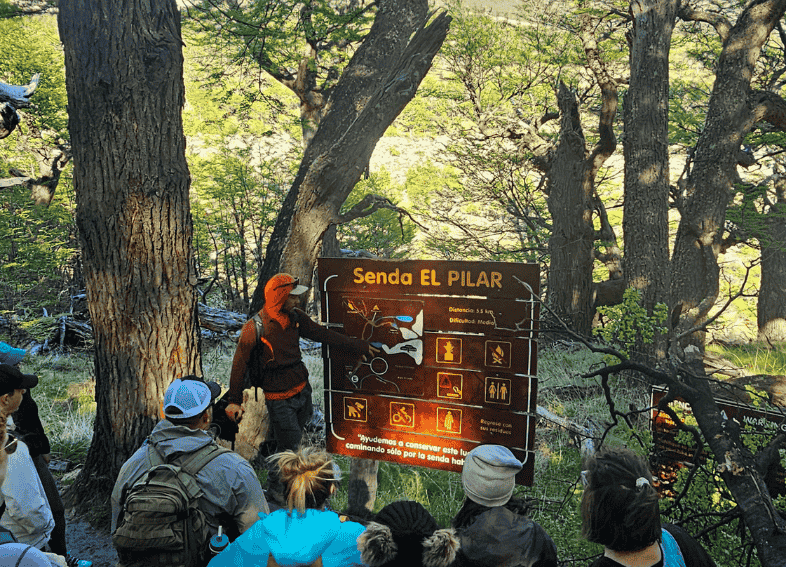
Poincenot Campground
About halfway through the hike, you’ll reach Poincenot Campground, a popular overnight spot for multi-day hikers. This is a great place to take a short rest and refuel before tackling the most demanding part of the trek.

The Final Ascent to Laguna de los Tres
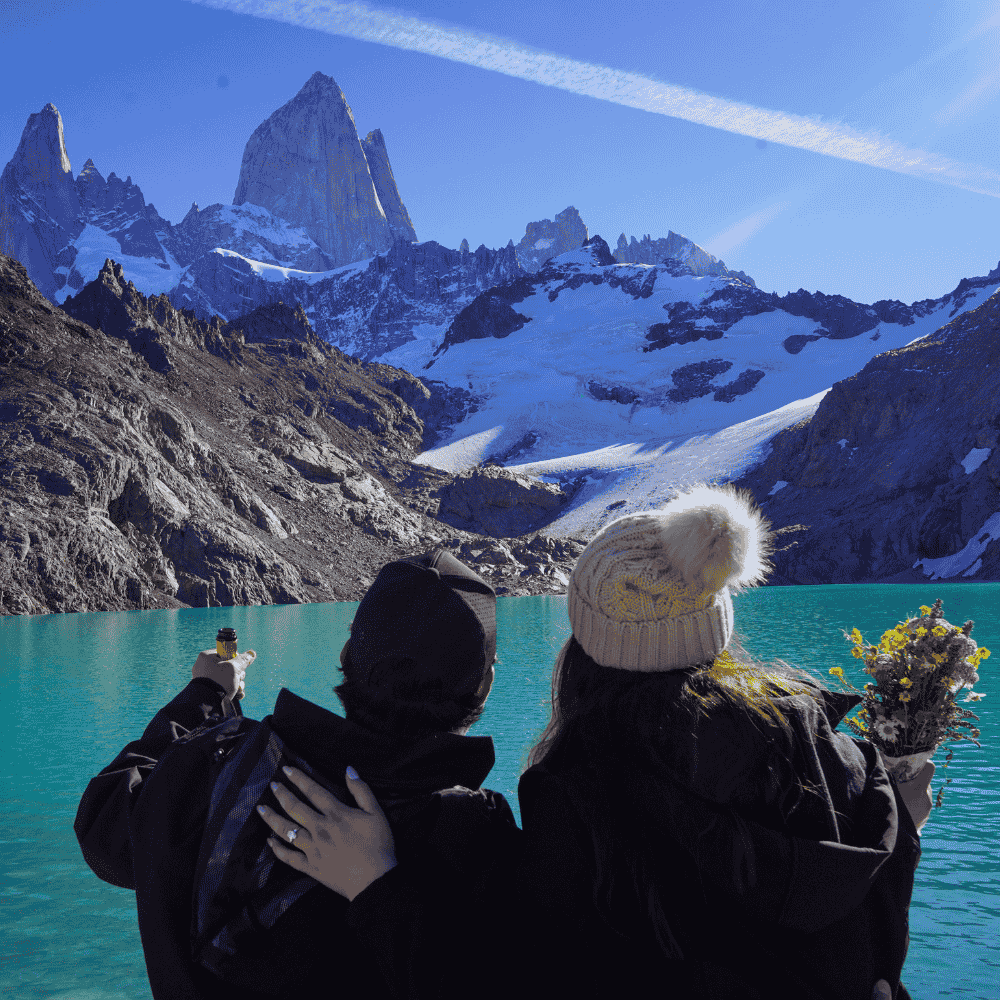
The final ascent is the most strenuous section of the hike. A steep, rocky trail climbs 500 meters (1,300 feet) over just 1 km, but once you reach the top, you’ll be greeted by the spectacular sight of Laguna de los Tres. The crystal-clear glacial waters reflect the towering spires of Mount Fitz Roy (IF WEATHER PERMITS), creating an unforgettable landscape.
Optional: Laguna Sucia Viewpoint
Just a short walk from Laguna de los Tres is an additional viewpoint overlooking Laguna Sucia, a deep turquoise lake nestled in a dramatic canyon below. This extra viewpoint adds even more depth and perspective to your experience at the top.
What to Bring for Laguna de los Tres hike
Water and snacks/lunch
There are no services along the trail, so come prepared with at least 2 liters of water and food for the day.
Layered clothing
Patagonia’s weather can be unpredictable. Dress in layers to prepare for changing conditions, including wind, sun, and possible rain.
Sturdy hiking boots
The trail can be rocky and steep in parts, so proper footwear is essential.
Sun protection
Bring sunscreen, a hat, and sunglasses, as parts of the trail are exposed to the sun.
Camera
The views at Laguna de los Tres are among the most photogenic in Patagonia.
Why Hike Laguna de los Tres with Connect Patagonia?
Our expert guides make your trek to Laguna de los Tres an unforgettable adventure. We not only ensure your safety but also enrich your journey with fascinating insights into the region’s history, geology, and wildlife. Whether you’re a seasoned hiker or a rst-time visitor to Patagonia, we’ll help you navigate the trail with condence and create memories that will last a lifetime.
Pro hiking tips for this hike!
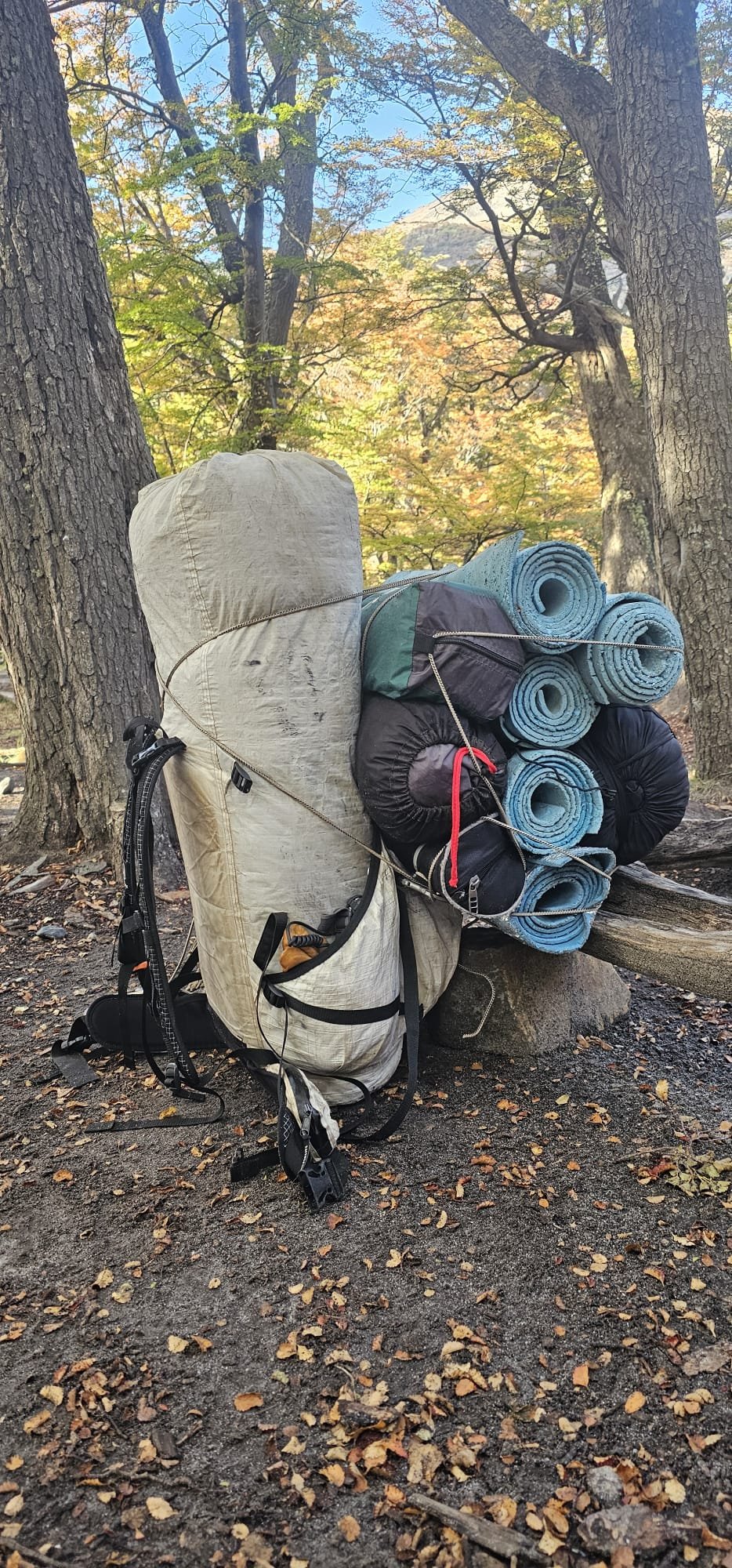
Consider Camping at Poincenot
For those wanting a more immersive experience, consider camping at Poincenot. It’s a popular campsite about halfway to Laguna de los Tres and offers an opportunity to experience the Fitz Roy massif at sunrise, with fewer people on the trail in the early morning.

Start Early for the Best Views
Patagonia’s weather can be unpredictable, and early morning hikes give you the best chance of clear skies for unobstructed views of Mount Fitz Roy. Starting early also helps you avoid crowds, allowing for a more peaceful experience.
Trekking poles are your friends
During up hill treks and especially during the descent, they help take some of the strain off your legs during the uphill battle, while giving balance and security during the descent.
Ready to Capture Your Adventure in El Chalten?
Every moment in Patagonia is a masterpiece waiting to be captured. With our professional photography services, you can relive this magical place in the world, and your incredible journey for years to come. Let us turn your adventure into a story you’ll cherish forever.
Frequently Asked Questions About Hiking Laguna de los Tres.
Is hiking Laguna de los tres safe?
Yes, hiking Laguna de los tres is relatively safe. But like all hikes in El Chalten it has its dangers. Wind and weather complicate the hike also the different seasons create variables. I would like to say the trail is well marked, but if you are found in bad weather it can be easy to take a wrong turn and you will find yourself taking the long way home. Use an app like Gaia GPS to help you stay on trail.
Do I need trekking poles for the hike?
Yes, many hikers I’ve talked with have said they thought they didn’t need them, but the rocky steep section going up and down made them very grateful they had them.
Can it be done as a day hike?
Yes, many do it in 8-10 hrs from town. But if you start late you risk finishing in the dark or encountering wind. Either way 24km in a day is totally possible.
What to wear hiking in Patagonia?
Short answer: Dress in layers, prioritize wind/rain protection, and avoid cotton.
Core layers
Base layer: Synthetic or merino top (long/short sleeve depending on temp).
Mid layer: Fleece or light insulated jacket (synthetic or down).
Shell: Waterproof/windproof jacket (2.5–3L; taped seams, good hood); lightweight rain pants.
Bottoms: Quick-dry hiking pants or leggings; add thermal tights in cold/windy conditions.
Footwear
Shoes/boots: Sturdy, broken-in hikers with good tread (wet roots/rock).
Socks: Merino or synthetic; consider liner socks to prevent blisters.
Optional: Gaiters for mud/snow; microspikes in winter/early spring if icy.
Accessories (don’t skip)
Brimmed cap + warm hat (wind steals heat fast).
Gloves (light liner + wind/waterproof shell if cold).
Sunglasses (category 3–4 if near snow/ice); high-SPF sunscreen & lip balm.
Buff/neck gaiter for wind and sun.
Trekking poles (windy descents), small first-aid, space blanket.
Seasonal tweaks (Southern Hemisphere)
Summer (Dec–Feb): Light base, breathable mid, full shell for wind; sun gear is critical.
Autumn (Mar–May): Warmer mid layer; pack thin insulated pants/gloves.
Winter (Jun–Aug): Heavy mid + insulated jacket; thermal base on legs; microspikes/gaiters.
Spring (Sep–Nov): Unstable—bring full rain kit and warm layers even on “nice” days.
Key tips
Layer early: Add/remove before you sweat or chill.
Waterproof ≠ breathable: Vent (pit zips, front zip) during climbs.
No cotton: Stays wet, increases chill risk.
Is there snow/ice on the Laguna de los tres hike?
Outside the height of summer you may encounter snow or ice, especially early or late season. Bring microspikes/crampons if in doubt. Make sure you check the weather or feel free to contact me here if you have doubts.
Is the alternative route via Laguna Torre worth it?
If you are more experienced and want to squeeze in one big long day I would recommend this. The best way to do this would be to start the laguna de los tres hike from the classic start point, then on your way back this way.
Is Patagonia safe?
Yes, Patagonia is generally very safe for travelers. Most issues aren’t crime but weather, wind, distance, and logistics.
What to know
Cities & towns: Low violent crime; use normal precautions (watch bags at bus stations/ATMs, don’t leave gear in cars).
Trails: Main routes are well marked; biggest risks are strong winds, cold rain/snow, river crossings, and long distances between help. If Snow begins the trail can become difficult to follow.
Driving: Expect high winds, gravel, wildlife on roads, and long gaps between fuel, plan your stops.
Health & water: Tap water is usually safe in towns; treat backcountry water. Carry layers, first aid, and extra food.
Guides: A local guide improves safety calls (weather, timing) and makes the experience richer.
Insurance & contacts: Carry travel insurance and offline maps. Argentina emergencies: 911/107 (medical). Chile: 133 (police) / 131 (ambulance).
How do you use hiking poles?
Set length: Elbow near 90° on flats; –5–10 cm uphill, +5–10 cm downhill.
Straps: Hand up through loop, then grip—let the strap carry weight.
Technique: Opposite-foot planting on flats; plant slightly behind uphill to push, slightly ahead downhill to brake.
Crossings & wind: Two poles down for streams; short, firm plants in strong wind.
Avoid mistakes: Don’t overreach poles in front; no death grip; adjust for side-hills.
Care: Tighten locks; use baskets in mud/snow, rubber tips on rock/boards.
Is hiring a porter common in Patagonia?
Yes, many travelers in Patagonia, especially around El Chaltén, hire porters to enhance their experience and make challenging trails more manageable. Hiring a porter is a smart choice for those aiming to explore multiple trails or take on more challenging terrain.
How bad is the descent?
Descent can be hard on knees. Use poles, control your pace, avoid surge downhill. watch your step and take it slowly, theirs a lot of loose rock.